Composers
Claudin de Sermisy
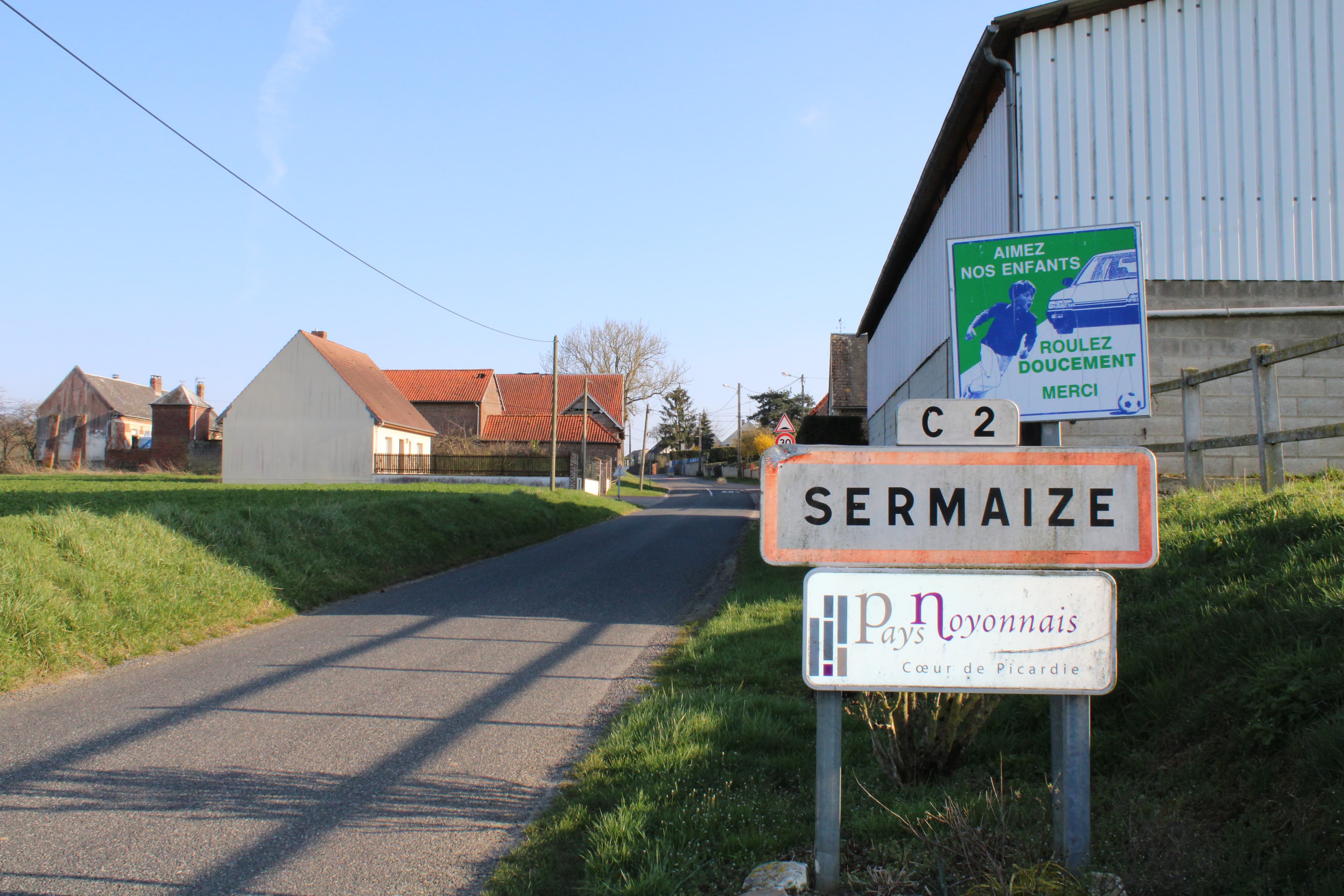
Claudin de Sermisy was born around 1490, possibly in the village of Sermaize (Oise) hence his name. No information is available regarding his early life.
It is known that in 1508 he was a choirboy at the Sainte-Chapelle in Paris and, shortly thereafter (before 1515), a singer at the Chapelle Royale. Appointed canon of Notre-Dame-de-la-Rotonde in Rouen, he exchanged this position in 1524 for a similar one at Cambron, near Abbeville.
By 1532, he was already sub-master of the Chapelle Royale, and from the following year onwards, he held this post concurrently with that of canon of the Sainte-Chapelle. He likely retained both positions until his death, even though he was granted the prebend of Sainte-Catherine de Troyes in 1554.
He enjoyed a formidable reputation, and his contemporaries regarded him as one of the great masters of the era, on a par with Josquin des Prés. He composed both sacred and secular music of equal quality.
The polyphonic style of his masses and motets is, of course, inherited from the Franco-Flemish school—and Josquin des Prés in particular (pairing of voices, imitation, etc.)—yet he lightens it by introducing more homophonic passages and simplifying the melodies; this enhances textual clarity and reveals the influence of the chanson style on his sacred music.
He appears to have devoted himself more specifically to sacred music in his later years, as most of his chansons were written before 1536.
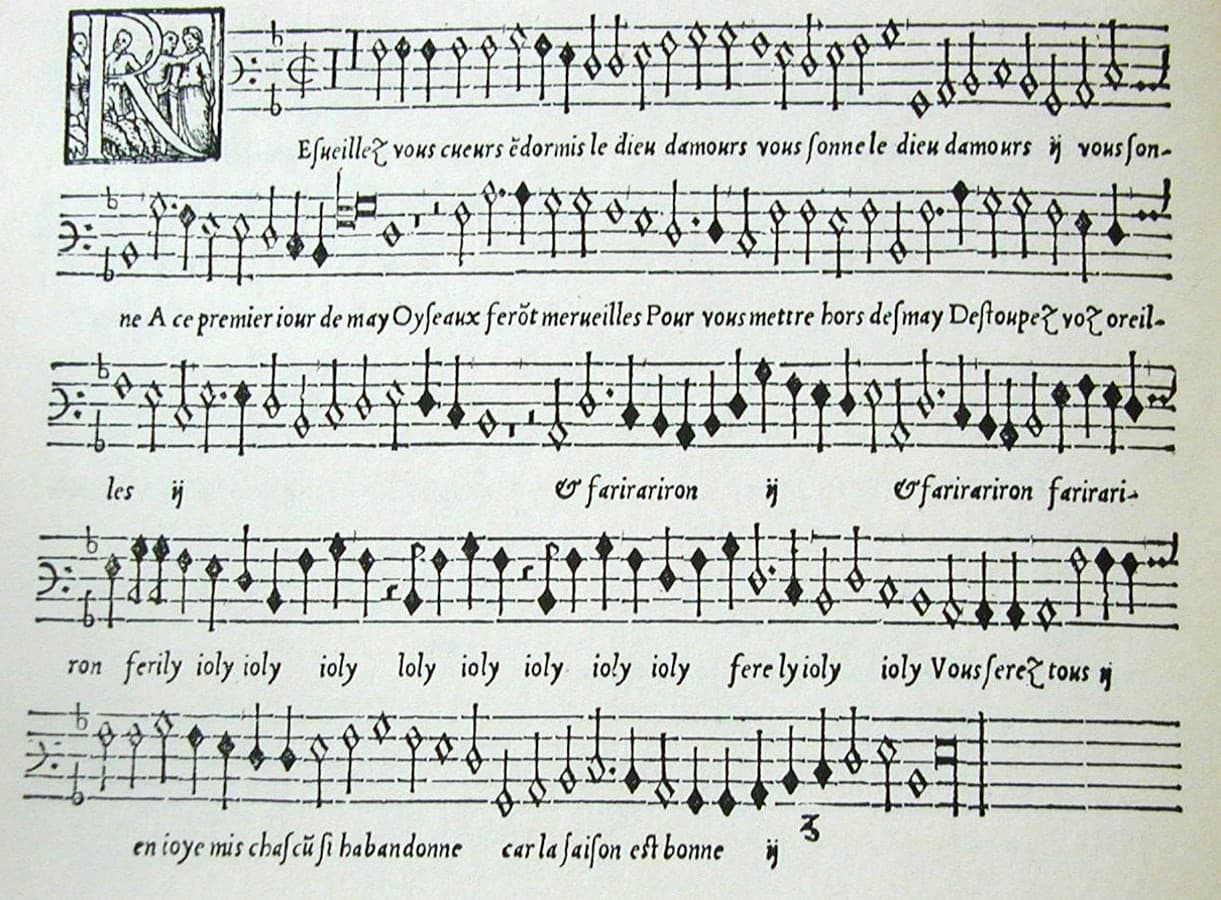
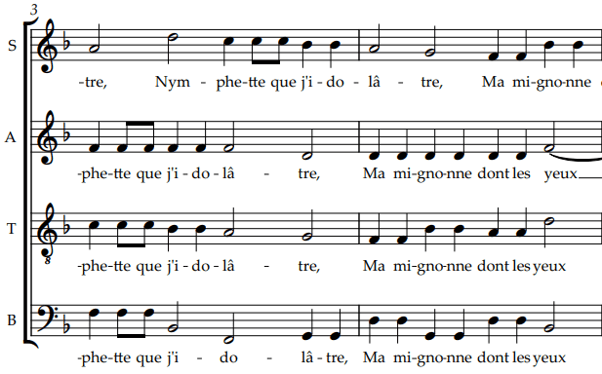
His chansons enjoyed immediate popularity. Set to poems by Francis I, Bonaventure des Périers, and, above all, Clément Marot, they are characterized by well-defined melodic phrases and highly varied rhythms.
Editions of his works circulated regularly beyond France.
He died in Paris in 1562.
(based on Larousse « Dictionnaire de la musique »)
(illustration: René Hourdry, CC BY-SA 4.0 <https://creativecommons.org/licenses/by-sa/4.0>, via Wikimedia Commons)